


We use cookies to improve your browsing experience and provide meaningful content. Read our cookie policy. Accept
  •  Customer Login
  • Register
  •  View Cart (0)
  •  Customer Login
  • Register
  •  View Cart (0)

Takara Bio
  • Products
  • Services & Support
  • Learning centers
  • APPLICATIONS
  • About
  • Contact Us

Clontech Takara Cellartis

Close

  • ‹ Back to CRISPR/Cas9 delivery methods
  • Electroporation-grade Cas9 for editing in diverse cell types
  • CRISPR/Cas9 gene editing with AAV
  • CRISPR/Cas9 gesicles overview
  • Cas9 Gesicles—reduced off-target effects
  • sgRNA-Cas9 delivery to many cell types
  • Tet-inducible Cas9 for gene editing
AAV systems AAV systems
Home › Learning centers › Gene function › Gene editing › CRISPR/Cas9 delivery methods › CRISPR/Cas9 gene editing with AAV

Gene editing

  • Gene editing product finder
  • Gene editing tools and information
    • sgRNA design tools
    • Tools for successful CRISPR/Cas9 genome editing
    • Gene editing posters
    • Customer data for Guide-it products
    • How to design sgRNA sequences
    • Introduction to the CRISPR/Cas9 system
    • Gene editing of CD3+ T cells and CD34+ HSCs
  • CRISPR/Cas9 knockouts
    • Mutation detection kit comparison
    • Screening for effective guide RNAs
    • Monoallelic versus biallelic mutants
    • Indel identification kit for mutation characterization
  • CRISPR/Cas9 knockins
    • Choosing an HDR template format
    • Homology-directed repair FAQs
    • Mouse CRISPR knockin protocol
    • Site-specific gene knockins using long ssDNA
    • Efficient CRISPR/Cas9-mediated knockins in iPS cells
    • Oligo design tool for detecting precise insertions
      • Oligo design tool user guide (insertions)
  • Genome-wide screening
    • CRISPR library screening
    • CRISPR library screening webinar
    • Phenotypic screen using sgRNA library system
  • Creating and screening for SNPs
    • SNP detection with knockin screening kit
    • Oligo design tool for SNP screening
      • Oligo design tool user guide (SNPs)
    • Sign up: SNP engineering webinar
    • Guide-it SNP Screening Kit FAQs
  • CRISPR/Cas9 delivery methods
    • Electroporation-grade Cas9 for editing in diverse cell types
    • CRISPR/Cas9 gene editing with AAV
    • CRISPR/Cas9 gesicles overview
    • Cas9 Gesicles—reduced off-target effects
    • sgRNA-Cas9 delivery to many cell types
    • Tet-inducible Cas9 for gene editing
  • Cre recombinase
    • Control your Cre recombinase experiments
    • Fast Cre delivery with gesicle technology
New products
Need help?
Contact Sales
AAV systems AAV systems
Tech Note

Improved CRISPR/Cas9 genome editing in hard-to-transfect mammalian cells using AAV

  • Viruses encoding truncated portions of Cas9 with a 1.6-kb region of homology are prepared in HEK 293T packaging cells:
    Recombination in target cells results in a full-length Cas9 gene expression cassette
  • An innovative method to deliver the large Cas9 gene with a small virus:
    To overcome the size limitation of AAV, the Cas9 gene is divided between two vectors
  • AAV-mediated delivery of Cas9 and sgRNA expression cassettes results in more indels, especially in hard-to-transfect cell lines:
    A higher rate of mutation is obtained with AAV-mediated delivery of Cas9 and sgRNA compared to transfection-based delivery

Introduction Results Conclusions References

Introduction  

The use of CRISPR/Cas9 technology can be limited by delivery options for Cas9 and the single guide RNA (sgRNA). Transfection of cells with plasmids encoding Cas9 and sgRNA is the most commonly used method. However, many human cell types are considered hard-to-transfect, making plasmid-based delivery difficult. One alternate strategy for delivering CRISPR/Cas9 components to these cell types is viral transduction.

Results  

Advantages of AAV for CRISPR/Cas9 delivery

Recombinant adeno-associated virus (AAV) has several advantages over other types of viruses for gene delivery. Importantly, AAV does not integrate into the host genome, precluding genomic integration and sustained expression of Cas9, thereby reducing the likelihood of Cas9 off-target effects. AAV also exhibits lower immunogenicity and has a small genome relative to other non-integrating viruses (e.g., adenovirus), making it easier to manipulate.

An AAV-based system for Cas9 and sgRNA delivery

The small size of the AAV genome can be a limitation when packaging a large gene such as the S. pyogenes Cas9 (SpCas9). The 4.1-kb SpCas9 gene together with its optimal promoter and polyadenylation signal exceeds the capacity that can be efficiently packaged into AAV viral particles (Byrne, Mali, and Church 2014). To overcome this limitation, we developed a system that takes advantage of DNA recombination that is inherent to AAV genome processing (Hirsch, Agbandje-McKenna, and Samulski 2010). The vectors included with the AAVpro CRISPR/Cas9 Helper Free System (AAV2) split the Cas9 gene into two portions (Cas9-Up and Cas9-Down) that have a 1.6-kb shared region of homology (Figure 1). This homologous region mediates recombination with high efficiency inside the target cell, thereby producing a full-length Cas9 expression cassette.

Figure 1. AAV vector recombination to produce full-length Cas9. The large size of the Cas9 gene (4.1 kb) precludes its packaging into a single AAV particle. The pAAV-Guide-it-Up and pAAV-Guide-it-Down plasmids contain truncated upstream and downstream portions of Cas9 respectively, with a shared 1.6-kb region of homology. Separate viruses are generated with each plasmid. Transduction of target cells with both viruses results in recombination to generate a full-length Cas9 expression cassette. Upstream and downstream portions of Cas9, with a shared 1.6-kb region of homology are split between two separate plasmids, pAAV-Guide-it-Up and pAAV-Guide-it-Down, respectively (Figure 2). A user-defined guide sequence is cloned into the pAAV-Guide-it-Down plasmid, which is provided prelinearized to allow for seamless, single-step cloning (Figure 2B).

Figure 2. Vector maps of pAAV-Guide-it-Up and pAAV-Guide-it-Down. Panel A. The pAAV-Guide-it-Up plasmid contains a truncated upstream portion of Cas9 (3,106 bp) that encodes the N-terminal 1,035 amino acids of Cas9 under the control of the CMV promoter. Panel B. The pAAV-Guide-it-Down plasmid contains the downstream portion of Cas9 (2,616 bp) that encodes the C-terminal 872 amino acids, and is provided pre-linearized. A gene-specific guide sequence can be cloned into the pAAV-Guide-it-Down plasmid downstream of the human U6 promoter. Oligos encoding the sgRNA are annealed to form a duplex. The duplexed DNA is then cloned into the pre-linearized pAAV-Guide-it-Down plasmid.

The AAVpro CRISPR/Cas9 Helper Free System workflow

The AAVpro CRISPR/Cas9 Helper Free System (AAV2) is a complete system for the delivery of Cas9 and a gene-specific sgRNA to mammalian cells using AAV2 (AAV serotype 2). First, oligos encoding a gene-specific guide sequence are annealed to form duplexes. The duplexed DNA is ligated to the pre-linearized pAAV-Guide-it-Down plasmid (Figure 2B). All the components needed for the annealing and ligation of the oligos are provided. AAV2-Up and AAV2-Down viruses are packaged independently in a HEK 293T packaging cell line. Packaging cells are transfected with the respective pAAV-Guide-it-Up and pAAV-Guide-it-Down plasmids, and the pHelper and pRC2-mi342 plasmids that encode viral packaging components and miRNA-342, a human microRNA that increases AAV2 titer. AAV2 viral particles are then extracted using the included AAVpro Extraction Solution. Target cells are then transduced with equal number of AAV2-Up and AAV2-Down viruses to ensure efficient recombination. Recombination between Cas9-Up and Cas9-Down within target cells results in a full-length Cas9 gene expression cassette. Following transcription and translation, Cas9 is guided to the target genomic locus by the sgRNA, where it creates a double-stranded break.

Figure 3. Workflow of the AAVpro CRISPR/Cas9 Helper Free System (AAV2). The pAAV-Guide-it-Up and pAAV-Guide-it-Down vectors encode truncated upstream and downstream portions of the Cas9 gene, respectively, with a 1.6-kb overlapping region of homology. Duplexed guide-sequence oligos targeting a specific gene are ligated to the pre-linearized pAAV-Guide-it-Down plasmid. Separate AAV2-Up and AAV2-Down viruses are generated by transfecting HEK 293T cells with either pAAV-Guide-it-Up or pAAV-Guide-it-Down along with pRC2-mi342 and pHelper plasmids. The resulting viral particles are isolated using AAV Extraction Solution. Target cells are co-transduced with equal numbers of both AAV2-Up and AAV2-Down viruses. The 1.6-kb homologous region results in recombination during AAV genome processing giving rise to full-length Cas9 that is transcribed and translated. The Cas9-sgRNA complex then mediates cleavage of the target gene.

Produce consistent and equivalent high-titer AAV2-Up and AAV2-Down virus

To ensure efficient genome editing, obtaining high and equivalent titers of both AAV2-Up and AAV2-Down virus is critical. AAV2-Up and AAV2-Down viral particles encoding truncated portions of Cas9 and a sgRNA targeting CCR5 were generated in three independent experiments using the AAVpro CRISPR/Cas9 Helper Free System (AAV2) (Figure 4). Identically high titers were obtained for both viruses. The AAVpro Extraction Solution, which is provided with the kit, results in viral yields that are 3 times higher than those obtained with traditional freeze-thaw methods.

Figure 4. Consistent recovery of equally high genomic titers of AAV2-Up and AAV2-Down viral particles. AAV2-Up and AAV2-Down viral particles encoding a sgRNA targeting CCR5 and truncated portions of Cas9 were extracted from HEK 293T cells using the AAVpro Extraction Solution. Genomic titer was measured using the AAVpro Titration Kit (for Real Time PCR). Equivalent and high genomic titers were obtained for AAV2-Up and AAV2-Down viral particles in three independent experiments.

AAV2 delivery of Cas9 and sgRNA results in more indels compared to plasmid transfection

The CCR5 gene, which encodes a cell surface chemokine receptor, was targeted for CRISPR/Cas9 editing. Oligos containing a guide sequence targeting the CCR5 gene were designed, annealed, and ligated to the pAAV-Guide-it-Down plasmid. AAV2-Up and AAV2-Down viruses were packaged following the recommended protocol. HEK 293, HepG2, and MCF7 cells were then co-transduced with equal numbers of AAV2-Up and AAV2-Down viruses. In this experiment, HEK 293 is considered an easy-to-transfect cell line and HepG2 and MCF7 are considered hard-to-transfect cell lines. As a control, cells were transfected with a plasmid encoding Cas9 and a sgRNA targeting CCR5 by transfection. Seventy-two hours after either transfection or transduction, cells were harvested and analyzed using the Guide-it Mutation Detection Kit, a method that employs a mismatch specific endonuclease to identify insertions or deletions (indels). The resulting cleavage reaction was analyzed by agarose gel electrophoresis (Figure 5). The percentage of indels was quantified using densitometry (Cong et al. 2013). As anticipated, plasmid transfection of Cas9-sgRNA yielded significant indel formation only in HEK 293 cells. For the hard-to-transfect cells, HepG2 and MCF7 cells, there was almost no detectable indel formation (Figure 5). Conversely, AAV2-mediated delivery of Cas9-sgRNA complexes yielded significant indel formation in both HEK 293 and the hard-to-transfect cells (Figure 5). Interestingly, the fold difference in indel formation between transfection and transduction was far more pronounced in HepG2 and MCF7 cells than HEK 293 cells (5.6- and 6.3-fold versus 2.0-fold). These data underscore the efficacy of the AAVpro CRISPR/Cas9 Helper Free System (AAV2) at inducing site-specific genomic modifications in hard-to-transfect cells.

Figure 5. The AAVpro CRISPR/Cas9 system results in more indel formation than plasmid transfection, especially in hard-to-transfect cell lines. The indicated cell types (1.0 x 10⁵ cells) were seeded in 12-well plates one day before either transfection or transduction. Cells were transduced with 1.0 x 10⁵ MOI (genomic titer) each of AAV2-Up and AAV2-Down viral particles targeting the CCR5 gene. Genomic titers were calculated using the AAVpro Titration Kit (for Real Time PCR). After 72 hours, cells were harvested and analyzed using the Guide-it Mutation Detection Kit. As a control, Guide-it-ZsGreen1 plasmid (P: 2.5 µg) targeting the CCR5 gene was introduced by transfection. As a negative control ("-"), cells without either transfection or transduction were included in the analysis. Indel formation (%) was assessed by agarose gel electrophoresis and measured using densitometry.

Conclusions  

The AAVpro CRISPR/Cas9 Helper Free System (AAV2) is a complete system for the delivery of Cas9 and sgRNA to mammalian cells using AAV2. The kit contains all of the necessary reagents to prepare infection-ready, high-titer AAV particles to deliver Cas9 and a user-defined, gene-specific sgRNA. AAV-mediated delivery of Cas9 and sgRNA using this system, results in greater genome editing compared to plasmid transfection delivery, especially in hard-to-transfect cells.

References  

Byrne, S. M., Mali, P. & Church, G. M. Genome editing in human stem cells. Methods Enzymol. 546, 119–38 (2014).

Cong, L. et al. Multiplex Genome Engineering Using CRISPR/Cas Systems. Science (80). 339, 819–823 (2013).

Hirsch, M. L., Agbandje-McKenna, M. & Samulski, R. J. Little vector, big gene transduction: fragmented genome reassembly of adeno-associated virus. Mol. Ther. 18, 6–8 (2010).

Related products

Cat. # Product Size Price License Quantity Details
631443 Guide-it™ Mutation Detection Kit 100 Rxns USD $579.00

The Guide-it Mutation Detection Kit contains all the reagents needed for PCR-based identification of insertions or deletions generated during cellular non-homologous end joining (NHEJ) repair. The first step is the amplification of the putative target sequence directly from cells. This kit uses Terra Direct PCR Polymerase Mix and Buffer, so there is no need to extract genomic DNA from your cell population prior to amplification of your target sequence. The amplicon is then melted and hybridized to form the mismatched targets for cleavage by the Guide-it Resolvase. Sufficient material is provided for 100 amplification and cleavage reactions.

Notice to purchaser

Our products are to be used for Research Use Only. They may not be used for any other purpose, including, but not limited to, use in humans, therapeutic or diagnostic use, or commercial use of any kind. Our products may not be transferred to third parties, resold, modified for resale, or used to manufacture commercial products or to provide a service to third parties without our prior written approval.

Documents Components You May Also Like Image Data Resources

Back

The CRISPR/Cas9 system, a simple, RNA-programmable method to mediate genome editing in mammalian cells

The CRISPR/Cas9 system, a simple, RNA-programmable method to mediate genome editing in mammalian cells

The CRISPR/Cas9 system, a simple, RNA-programmable method to mediate genome editing in mammalian cells. The CRISPR/Cas9 system relies on a single guide RNA (sgRNA) directing the Cas9 endonuclease to induce a double strand break at a specific target sequence three base-pairs upstream of a PAM sequence in genomic DNA. This DNA cleavage can be repaired in one of two ways: 1) nonhomologous end joining, (NHEJ) resulting in gene knockout due to error-prone repair (orange), or 2) homology-directed repair (HDR), resulting in gene knockin due to the presence of a homologous repair template (purple).

Back

The Guide-it Mutation Detection Kit is used to confirm the presence of mutations in genomic DNA

The Guide-it Mutation Detection Kit is used to confirm the presence of mutations in genomic DNA
The Guide-it Mutation Detection Kit is used to confirm the presence of mutations in genomic DNA. In the first step your target sequence is amplified directly from your target cells using the Terra PCR Direct Polymerase included in the kit, so there is no need to extract and purify genomic DNA from your cell population prior to amplification of your target sequence. The amplicon is then melted and hybridized to form the mismatched targets that can be cleaved by the Guide-it Resolvase.

Back

Comparison of the Guide-it and Surveyor assays for detecting mutations in mammalian cells

Comparison of the Guide-it and Surveyor assays for detecting mutations in mammalian cells

Comparison of the Guide-it and Surveyor assays for detecting mutations in mammalian cells. 293T cells were transfected with plasmids encoding Cas9 and a sgRNA specific for the AAVS1 locus. Transfected cells were harvested 48 hr post-transfection and mixed with untransfected cells at varying ratios. An amplicon containing the targeted AAVS1 locus was generated using Terra Direct Polymerase Mix, and the PCR products were purified and cleaved using either Guide-it Resolvase or the Cel1 enzyme (Surveyor assay). Mutations were easily discernable when using the Guide-it kit. In contrast, the Surveyor Assay showed considerable smearing, making it difficult to determine cleavage efficiency and reducing the ability to detect low levels of mutation.

Back

Successful knockout of AcGFP1 in HT1080 cells using the CRISPR/Cas9 system

Successful knockout of AcGFP1 in HT1080 cells using the CRISPR/Cas9 system

Successful knockout of AcGFP1 in HT1080 cells using the CRISPR/Cas9 system. Panel A. Schematic of the AcGFP DNA sequence and the location of sgRNAs tested and primer placement for the mutation detection assay. HT1080 cells containing a single copy of AcGFP1 were transfected with 1.5 μg of plasmid DNA for Cas9 expression and 1.5 μg of a plasmid harboring one of two sgRNAs (T1 or T2) using Xfect Transfection Reagent. The cell population was assayed 6 days post-transfection for cleavage efficiency and loss of fluorescence. Panel B. Using the Guide-it Mutation Detection Kit, cleavage products were detected for both sgRNAs, indicating that both CRISPRs successfully disrupted the AcGFP1 locus. Panel C. The AcGFP1 disruptions were functionally relevant, as a subpopulation of non-fluorescent cells could be detected by FACS.

Back

631443: Guide-it Mutation Detection Kit

631443: Guide-it Mutation Detection Kit
631448 Guide-it™ Mutation Detection Kit 25 Rxns USD $273.00

The Guide-it Mutation Detection Kit contains all the reagents needed for PCR-based identification of insertions or deletions generated during cellular non-homologous end joining (NHEJ) repair. The first step is the amplification of the putative target sequence directly from cells. This kit uses Terra Direct PCR Polymerase Mix and Buffer, so there is no need to extract genomic DNA from your cell population prior to amplification of your target sequence. The amplicon is then melted and hybridized to form the mismatched targets for cleavage by the Guide-it Resolvase. Sufficient material is provided for 100 amplification and cleavage reactions.

Notice to purchaser

Our products are to be used for Research Use Only. They may not be used for any other purpose, including, but not limited to, use in humans, therapeutic or diagnostic use, or commercial use of any kind. Our products may not be transferred to third parties, resold, modified for resale, or used to manufacture commercial products or to provide a service to third parties without our prior written approval.

Documents Components You May Also Like Image Data

Back

The Guide-it Mutation Detection Kit is used to confirm the presence of mutations in genomic DNA

The Guide-it Mutation Detection Kit is used to confirm the presence of mutations in genomic DNA
The Guide-it Mutation Detection Kit is used to confirm the presence of mutations in genomic DNA. In the first step your target sequence is amplified directly from your target cells using the Terra PCR Direct Polymerase included in the kit, so there is no need to extract and purify genomic DNA from your cell population prior to amplification of your target sequence. The amplicon is then melted and hybridized to form the mismatched targets that can be cleaved by the Guide-it Resolvase.

Back

Comparison of the Guide-it and Surveyor assays for detecting mutations in mammalian cells

Comparison of the Guide-it and Surveyor assays for detecting mutations in mammalian cells

Comparison of the Guide-it and Surveyor assays for detecting mutations in mammalian cells. 293T cells were transfected with plasmids encoding Cas9 and a sgRNA specific for the AAVS1 locus. Transfected cells were harvested 48 hr post-transfection and mixed with untransfected cells at varying ratios. An amplicon containing the targeted AAVS1 locus was generated using Terra Direct Polymerase Mix, and the PCR products were purified and cleaved using either Guide-it Resolvase or the Cel1 enzyme (Surveyor assay). Mutations were easily discernable when using the Guide-it kit. In contrast, the Surveyor Assay showed considerable smearing, making it difficult to determine cleavage efficiency and reducing the ability to detect low levels of mutation.

Back

Successful knockout of AcGFP1 in HT1080 cells using the CRISPR/Cas9 system

Successful knockout of AcGFP1 in HT1080 cells using the CRISPR/Cas9 system

Successful knockout of AcGFP1 in HT1080 cells using the CRISPR/Cas9 system. Panel A. Schematic of the AcGFP DNA sequence and the location of sgRNAs tested and primer placement for the mutation detection assay. HT1080 cells containing a single copy of AcGFP1 were transfected with 1.5 μg of plasmid DNA for Cas9 expression and 1.5 μg of a plasmid harboring one of two sgRNAs (T1 or T2) using Xfect Transfection Reagent. The cell population was assayed 6 days post-transfection for cleavage efficiency and loss of fluorescence. Panel B. Using the Guide-it Mutation Detection Kit, cleavage products were detected for both sgRNAs, indicating that both CRISPRs successfully disrupted the AcGFP1 locus. Panel C. The AcGFP1 disruptions were functionally relevant, as a subpopulation of non-fluorescent cells could be detected by FACS.

Back

631448: Guide-it Mutation Detection Kit

631448: Guide-it Mutation Detection Kit


Gene editing resources

Product finder

Use this gene editing product finder to quickly locate kits for screening, delivery, and downstream assays.

CRISPR tools and information

What is CRISPR/Cas9? Need help designing the best guide RNAs? Learn all this and more.

Genome-wide library screening

Learn how to conduct a CRISPR/Cas9 guide RNA library phenotypic screen and view data demonstrating the use of our library.

CRISPR/Cas9 knockouts

Technotes and tools used to create or study CRISPR-Cas9-mediated gene knockouts (indels).
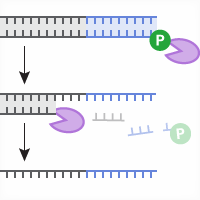
CRISPR/Cas9 knockins

Information, technotes and tools used to create or study gene knockouts by CRISPR/Cas9 and HDR.

Takara Bio USA, Inc.
United States/Canada: +1.800.662.2566 • Asia Pacific: +1.650.919.7300 • Europe: +33.(0)1.3904.6880 • Japan: +81.(0)77.565.6999
FOR RESEARCH USE ONLY. NOT FOR USE IN DIAGNOSTIC PROCEDURES. © 2026 Takara Bio Inc. All Rights Reserved. All trademarks are the property of Takara Bio Inc. or its affiliate(s) in the U.S. and/or other countries or their respective owners. Certain trademarks may not be registered in all jurisdictions. Additional product, intellectual property, and restricted use information is available at takarabio.com.

Takara Bio

Takara Bio USA, Inc. provides kits, reagents, instruments, and services that help researchers explore questions about gene discovery, regulation, and function. As a member of the Takara Bio Group, Takara Bio USA is part of a company that holds a leadership position in the global market and is committed to improving the human condition through biotechnology. Our mission is to develop high-quality innovative tools and services to accelerate discovery.

FOR RESEARCH USE ONLY. NOT FOR USE IN DIAGNOSTIC PROCEDURES.

Support
  • Contact us
  • Technical support
  • Customer service
  • Shipping & delivery
  • Sales
  • Feedback
Products
  • New products
  • Special offers
  • Instrument & reagent services
Learning centers
  • NGS
  • Gene function
  • Stem cell research
  • Protein research
  • PCR
  • Cloning
  • Nucleic acid purification
About
  • Our brands
  • Careers
  • Events
  • Blog
  • Need help?
  • Announcements
  • Quality and compliance
  • That's Good Science!
Facebook Twitter  LinkedIn

logo strip white

©2026 Takara Bio Inc. All Rights Reserved.

Region - North America Privacy Policy Terms and Conditions Terms of Use

Top


  • Next-generation sequencing
  • Spatial omics
  • RNA-seq
  • DNA-seq
  • Single-cell NGS automation
  • Reproductive health
  • Bioinformatics tools
  • Immune profiling
  • COVID-19 research
  • Viral detection with qPCR
  • SARS-CoV-2 pseudovirus
  • Human ACE2 stable cell line
  • Viral RNA isolation
  • Viral and host sequencing
  • Vaccine development
  • CRISPR screening
  • Drug discovery
  • Immune profiling
  • Publications
  • Real-time PCR
  • Great value master mixes
  • Signature enzymes
  • High-throughput real-time PCR solutions
  • Detection assays
  • References, standards, and buffers
  • Stem cell research
  • Media, differentiation kits, and matrices
  • Stem cells and stem cell-derived cells
  • mRNA and cDNA synthesis
  • In vitro transcription
  • cDNA synthesis kits
  • Reverse transcriptases
  • RACE kits
  • Purified cDNA & genomic DNA
  • Purified total RNA and mRNA
  • PCR
  • Most popular polymerases
  • High-yield PCR
  • High-fidelity PCR
  • GC rich PCR
  • PCR master mixes
  • Cloning
  • In-Fusion seamless cloning
  • Competent cells
  • Ligation kits
  • Nucleic acid purification
  • Automated platforms
  • Plasmid purification kits
  • Genomic DNA purification kits
  • DNA cleanup kits
  • RNA purification kits
  • Gene function
  • Gene editing
  • Viral transduction
  • Fluorescent proteins
  • T-cell transduction and culture
  • Tet-inducible expression systems
  • Transfection reagents
  • Cell biology assays
  • Protein research
  • Purification products
  • Two-hybrid and one-hybrid systems
  • Mass spectrometry reagents
  • Antibodies and ELISAs
  • Primary antibodies and ELISAs by research area
  • Fluorescent protein antibodies
  • New products
  • Special offers
  • OEM
  • Portfolio
  • Process
  • Facilities
  • Request samples
  • FAQs
  • Instrument services
  • Apollo services
  • ICELL8 services
  • SmartChip ND system services
  • Gene and cell therapy manufacturing services
  • Services
  • Facilities
  • Our process
  • Resources
  • Customer service
  • Sales
  • Make an appointment with your sales rep
  • Shipping & delivery
  • Technical support
  • Feedback
  • Online tools
  • GoStix Plus FAQs
  • Partnering & Licensing
  • Vector information
  • Vector document overview
  • Vector document finder
Takara Bio's award-winning GMP-compliant manufacturing facility in Kusatsu, Shiga, Japan.

Partner with Takara Bio!

Takara Bio is proud to offer GMP-grade manufacturing capabilities at our award-winning facility in Kusatsu, Shiga, Japan.

  • Automation systems
  • Shasta Single Cell System introduction
  • SmartChip Real-Time PCR System introduction
  • ICELL8 introduction
  • Next-generation sequencing
  • RNA-seq
  • Technical notes
  • Technology and application overviews
  • FAQs and tips
  • DNA-seq protocols
  • Bioinformatics resources
  • Webinars
  • Spatial omics
  • Trekker resources
  • Seeker resources
  • Spatial bioinformatics resources
  • Webinars
  • Real-time PCR
  • Download qPCR resources
  • Overview
  • Reaction size guidelines
  • Guest webinar: extraction-free SARS-CoV-2 detection
  • Technical notes
  • Nucleic acid purification
  • Nucleic acid extraction webinars
  • Product demonstration videos
  • Product finder
  • Plasmid kit selection guide
  • RNA purification kit finder
  • mRNA and cDNA synthesis
  • mRNA synthesis
  • cDNA synthesis
  • PCR
  • Citations
  • PCR selection guide
  • Technical notes
  • FAQ
  • Cloning
  • Automated In-Fusion Cloning
  • In-Fusion Cloning general information
  • Primer design and other tools
  • In‑Fusion Cloning tips and FAQs
  • Applications and technical notes
  • Stem cell research
  • Overview
  • Protocols
  • Technical notes
  • Gene function
  • Gene editing
  • Viral transduction
  • T-cell transduction and culture
  • Inducible systems
  • Cell biology assays
  • Protein research
  • Capturem technology
  • Antibody immunoprecipitation
  • His-tag purification
  • Other tag purification
  • Expression systems
  • Antibodies and ELISA
  • Molecular diagnostics
  • Interview: adapting to change with Takara Bio
  • Applications
  • Solutions
  • Partnering
  • Contact us
  • mRNA and protein therapeutics
  • Characterizing the viral genome and host response
  • Identifying and cloning protein targets
  • Expressing and purifying protein targets
  • Immunizing mice and optimizing vaccines
  • Pathogen detection
  • Sample prep
  • Detection methods
  • Identification and characterization
  • SARS-CoV-2
  • Antibiotic-resistant bacteria
  • Food crop pathogens
  • Waterborne disease outbreaks
  • Viral-induced cancer
  • Immunotherapy research
  • T-cell therapy
  • Antibody therapeutics
  • T-cell receptor profiling
  • TBI initiatives in cancer therapy
  • Cancer research
  • Kickstart your cancer research with long-read sequencing
  • Sample prep from FFPE tissue
  • Sample prep from plasma
  • Cancer biomarker quantification
  • Single cancer cell analysis
  • Cancer transcriptome analysis
  • Cancer genomics and epigenomics
  • HLA typing in cancer
  • Gene editing for cancer therapy/drug discovery
  • Alzheimer's disease research
  • Antibody engineering
  • Sample prep from FFPE tissue
  • Single-cell sequencing
  • Reproductive health technologies
  • Embgenix FAQs
  • Preimplantation genetic testing
  • Infectious diseases
  • Develop vaccines for HIV
Create a web account with us

Log in to enjoy additional benefits

Want to save this information?

An account with takarabio.com entitles you to extra features such as:

•  Creating and saving shopping carts
•  Keeping a list of your products of interest
•  Saving all of your favorite pages on the site*
•  Accessing restricted content

*Save favorites by clicking the star () in the top right corner of each page while you're logged in.

Create an account to get started

  • BioView blog
  • Automation
  • Cancer research
  • Career spotlights
  • Current events
  • Customer stories
  • Gene editing
  • Research news
  • Single-cell analysis
  • Stem cell research
  • Tips and troubleshooting
  • Women in STEM
  • That's Good Support!
  • About our blog
  • That's Good Science!
  • SMART-Seq Pro Biomarker Discovery Contest
  • DNA extraction educational activity
  • That's Good Science Podcast
  • Season one
  • Season two
  • Season three
  • Our brands
  • Our history
  • In the news
  • Events
  • Biomarker discovery events
  • Calendar
  • Conferences
  • Speak with us
  • Careers
  • Company benefits
  • Trademarks
  • License statements
  • Quality statement
  • HQ-grade reagents
  • International Contacts by Region
  • United States and Canada
  • China
  • Japan
  • Korea
  • Europe
  • India
  • Affiliates & distributors
  • Need help?
  • Privacy request
  • Website FAQs

That's GOOD Science!

What does it take to generate good science? Careful planning, dedicated researchers, and the right tools. At Takara Bio, we thoughtfully develop exceptional products to tackle your most challenging research problems, and have an expert team of technical support professionals to help you along the way, all at superior value.

Explore what makes good science possible

 Customer Login
 View Cart (0)
Takara Bio
  • Home
  • Products
  • Services & Support
  • Learning centers
  • APPLICATIONS
  • About
  • Contact Us
  •  Customer Login
  • Register
  •  View Cart (0)

Takara Bio USA, Inc. provides kits, reagents, instruments, and services that help researchers explore questions about gene discovery, regulation, and function. As a member of the Takara Bio Group, Takara Bio USA is part of a company that holds a leadership position in the global market and is committed to improving the human condition through biotechnology. Our mission is to develop high-quality innovative tools and services to accelerate discovery.

FOR RESEARCH USE ONLY. NOT FOR USE IN DIAGNOSTIC PROCEDURES.

Clontech, TaKaRa, cellartis

  • Products
  • Next-generation sequencing
  • COVID-19 research
  • Real-time PCR
  • Stem cell research
  • mRNA and cDNA synthesis
  • PCR
  • Cloning
  • Nucleic acid purification
  • Gene function
  • Protein research
  • Antibodies and ELISA
  • New products
  • Special offers
  • Next-generation sequencing
  • Spatial omics
  • RNA-seq
  • DNA-seq
  • Single-cell NGS automation
  • Reproductive health
  • Bioinformatics tools
  • Immune profiling
  • COVID-19 research
  • Viral detection with qPCR
  • SARS-CoV-2 pseudovirus
  • Human ACE2 stable cell line
  • Viral RNA isolation
  • Viral and host sequencing
  • Vaccine development
  • CRISPR screening
  • Drug discovery
  • Immune profiling
  • Publications
  • Real-time PCR
  • Great value master mixes
  • Signature enzymes
  • High-throughput real-time PCR solutions
  • Detection assays
  • References, standards, and buffers
  • Stem cell research
  • Media, differentiation kits, and matrices
  • Stem cells and stem cell-derived cells
  • mRNA and cDNA synthesis
  • In vitro transcription
  • cDNA synthesis kits
  • Reverse transcriptases
  • RACE kits
  • Purified cDNA & genomic DNA
  • Purified total RNA and mRNA
  • PCR
  • Most popular polymerases
  • High-yield PCR
  • High-fidelity PCR
  • GC rich PCR
  • PCR master mixes
  • Cloning
  • In-Fusion seamless cloning
  • Competent cells
  • Ligation kits
  • Nucleic acid purification
  • Automated platforms
  • Plasmid purification kits
  • Genomic DNA purification kits
  • DNA cleanup kits
  • RNA purification kits
  • Gene function
  • Gene editing
  • Viral transduction
  • Fluorescent proteins
  • T-cell transduction and culture
  • Tet-inducible expression systems
  • Transfection reagents
  • Cell biology assays
  • Protein research
  • Purification products
  • Two-hybrid and one-hybrid systems
  • Mass spectrometry reagents
  • Antibodies and ELISA
  • Primary antibodies and ELISAs by research area
  • Fluorescent protein antibodies
  • Services & Support
  • OEM
  • Instrument services
  • Gene and cell therapy manufacturing
  • Customer service
  • Sales
  • Shipping & delivery
  • Technical support
  • Feedback
  • Online tools
  • Partnering & Licensing
  • Vector information
  • OEM
  • Portfolio
  • Process
  • Facilities
  • Request samples
  • FAQs
  • Instrument services
  • Apollo services
  • ICELL8 services
  • SmartChip ND system services
  • Gene and cell therapy manufacturing
  • Services
  • Facilities
  • Our process
  • Resources
  • Sales
  • Make an appointment with your sales rep
  • Online tools
  • GoStix Plus FAQs
  • Vector information
  • Vector document overview
  • Vector document finder
  • Learning centers
  • Automation systems
  • Next-generation sequencing
  • Spatial omics
  • Real-time PCR
  • Nucleic acid purification
  • mRNA and cDNA synthesis
  • PCR
  • Cloning
  • Stem cell research
  • Gene function
  • Protein research
  • Antibodies and ELISA
  • Automation systems
  • Shasta Single Cell System introduction
  • SmartChip Real-Time PCR System introduction
  • ICELL8 introduction
  • Next-generation sequencing
  • RNA-seq
  • Technical notes
  • Technology and application overviews
  • FAQs and tips
  • DNA-seq protocols
  • Bioinformatics resources
  • Webinars
  • Spatial omics
  • Trekker resources
  • Seeker resources
  • Spatial bioinformatics resources
  • Webinars
  • Real-time PCR
  • Download qPCR resources
  • Overview
  • Reaction size guidelines
  • Guest webinar: extraction-free SARS-CoV-2 detection
  • Technical notes
  • Nucleic acid purification
  • Nucleic acid extraction webinars
  • Product demonstration videos
  • Product finder
  • Plasmid kit selection guide
  • RNA purification kit finder
  • mRNA and cDNA synthesis
  • mRNA synthesis
  • cDNA synthesis
  • PCR
  • Citations
  • PCR selection guide
  • Technical notes
  • FAQ
  • Cloning
  • Automated In-Fusion Cloning
  • In-Fusion Cloning general information
  • Primer design and other tools
  • In‑Fusion Cloning tips and FAQs
  • Applications and technical notes
  • Stem cell research
  • Overview
  • Protocols
  • Technical notes
  • Gene function
  • Gene editing
  • Viral transduction
  • T-cell transduction and culture
  • Inducible systems
  • Cell biology assays
  • Protein research
  • Capturem technology
  • Antibody immunoprecipitation
  • His-tag purification
  • Other tag purification
  • Expression systems
  • APPLICATIONS
  • Molecular diagnostics
  • mRNA and protein therapeutics
  • Pathogen detection
  • Immunotherapy research
  • Cancer research
  • Alzheimer's disease research
  • Reproductive health technologies
  • Infectious diseases
  • Molecular diagnostics
  • Interview: adapting to change with Takara Bio
  • Applications
  • Solutions
  • Partnering
  • Contact us
  • mRNA and protein therapeutics
  • Characterizing the viral genome and host response
  • Identifying and cloning protein targets
  • Expressing and purifying protein targets
  • Immunizing mice and optimizing vaccines
  • Pathogen detection
  • Sample prep
  • Detection methods
  • Identification and characterization
  • SARS-CoV-2
  • Antibiotic-resistant bacteria
  • Food crop pathogens
  • Waterborne disease outbreaks
  • Viral-induced cancer
  • Immunotherapy research
  • T-cell therapy
  • Antibody therapeutics
  • T-cell receptor profiling
  • TBI initiatives in cancer therapy
  • Cancer research
  • Kickstart your cancer research with long-read sequencing
  • Sample prep from FFPE tissue
  • Sample prep from plasma
  • Cancer biomarker quantification
  • Single cancer cell analysis
  • Cancer transcriptome analysis
  • Cancer genomics and epigenomics
  • HLA typing in cancer
  • Gene editing for cancer therapy/drug discovery
  • Alzheimer's disease research
  • Antibody engineering
  • Sample prep from FFPE tissue
  • Single-cell sequencing
  • Reproductive health technologies
  • Embgenix FAQs
  • Preimplantation genetic testing
  • Infectious diseases
  • Develop vaccines for HIV
  • About
  • BioView blog
  • That's Good Science!
  • Our brands
  • Our history
  • In the news
  • Events
  • Careers
  • Trademarks
  • License statements
  • Quality and compliance
  • HQ-grade reagents
  • International Contacts by Region
  • Need help?
  • Website FAQs
  • BioView blog
  • Automation
  • Cancer research
  • Career spotlights
  • Current events
  • Customer stories
  • Gene editing
  • Research news
  • Single-cell analysis
  • Stem cell research
  • Tips and troubleshooting
  • Women in STEM
  • That's Good Support!
  • About our blog
  • That's Good Science!
  • SMART-Seq Pro Biomarker Discovery Contest
  • DNA extraction educational activity
  • That's Good Science Podcast
  • Season one
  • Season two
  • Season three
  • Events
  • Biomarker discovery events
  • Calendar
  • Conferences
  • Speak with us
  • Careers
  • Company benefits
  • International Contacts by Region
  • United States and Canada
  • China
  • Japan
  • Korea
  • Europe
  • India
  • Affiliates & distributors
  • Need help?
  • Privacy request
Takara Bio
  • Products
  • Services & Support
  • Learning centers
  • APPLICATIONS
  • About
  • Contact Us