Product Overview
Reaction size guidelines for qPCR
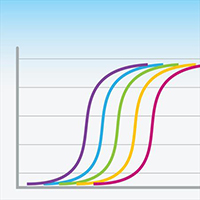
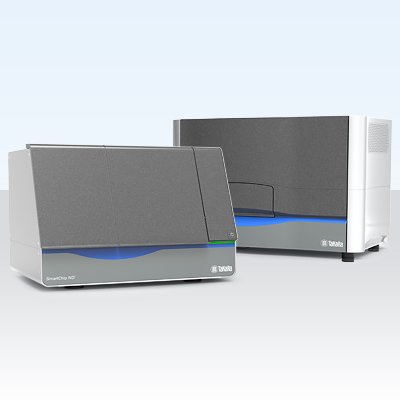
Real-time PCR (qPCR) is a powerful technique for analyzing samples to quantify target sequences or gene expression. qPCR is typically performed using reactions containing the sample template, master mix, forward and reverse primers, and often ROX reference dye, diluted in PCR-grade water. The volume of each reaction is dependent on experimental conditions, particularly the size of the reservoir in the plate or system being used. For instance, 96-well plates typically utilize 20-μl reactions, 384-well plates typically utilize 10-μl reactions, 1,536-well plates typically utilize 2-μl reactions, and high-throughput systems, like the SmartChip Real-Time PCR System, utilize volumes as low as 100 nl.
Typically, kits and master mixes report a product size based on number of reactions. However, as discussed above, reaction volumes can vary, resulting in differing numbers of reactions from a given kit based on the reaction volume utilized. This can be further complicated depending on the concentration of the starting master mix (e.g., 2X, 5X, etc.). To help clarify exactly how many reactions can be obtained from a given kit, we have provided the tables below (separated based on the general product type). Each lists the specific catalog number, total volume and concentration of master mix included, and number of reactions obtained with frequently utilized reaction volumes.
Takara Bio USA, Inc.
United States/Canada: +1.800.662.2566 • Asia Pacific: +1.650.919.7300 • Europe: +33.(0)1.3904.6880 • Japan: +81.(0)77.565.6999
FOR RESEARCH USE ONLY. NOT FOR USE IN DIAGNOSTIC PROCEDURES. © 2025 Takara Bio Inc. All Rights Reserved. All trademarks are the property of Takara Bio Inc. or its affiliate(s) in the U.S. and/or other countries or their respective owners. Certain trademarks may not be registered in all jurisdictions. Additional product, intellectual property, and restricted use information is available at takarabio.com.