



 Powered by Bioz
Lenti-X Packaging Single Shots
Watch the video and see how easy it is to use Lenti-X Packaging Single Shots to obtain consistently high lentiviral titers.



Lenti-X packaging single shots are fourth-generation lentiviral packaging systems utilizing an extremely simple, consistent one-step method for producing high-titer lentivirus. Typically, titers of 107–108 IFU per ml can be expected for the VSV-G version.
No additional transfection reagent is needed. Lenti-X packaging single shots consist of optimized ratios of Xfect Transfection Reagent and Lenti-X packaging plasmids—lyophilized and pre-aliquoted in single tubes or 96-well plates. High titer virus is produced by simply reconstituting this mixture with your lentiviral vector of choice in sterile water and adding it to 293T cells, e.g., Lenti-X 293T Cell Line (Cat. # 632180).
Lenti-X packaging single shots are fourth-generation lentiviral packaging systems utilizing an extremely simple, consistent one-step method for producing high-titer lentivirus. Typically, titers of 107–108 IFU per ml can be expected for the VSV-G version.
No additional transfection reagent is needed. Lenti-X packaging single shots consist of optimized ratios of Xfect Transfection Reagent and Lenti-X packaging plasmids—lyophilized and pre-aliquoted in single tubes or 96-well plates. High titer virus is produced by simply reconstituting this mixture with your lentiviral vector of choice in sterile water and adding it to 293T cells, e.g., Lenti-X 293T Cell Line (Cat. # 632180).
Choose from four types of Lenti-X packaging single shots optimized for different tropisms and integration properties:
The provided amounts of reagent and vector are optimized for high-titer lentivirus production in either a 10-cm dish or 96-well plate. Transfections can be carried out entirely in the presence of serum. Use of tetracycline-free FBS is critical for achieving high titers with this technology.
Please see the product's Certificate of Analysis for information about storage conditions, product components, and technical specifications. Please see the Kit Components List to determine kit components. Certificates of Analysis and Kit Components Lists are located under the Documents tab.
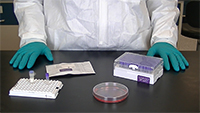
Watch the video and see how easy it is to use Lenti-X Packaging Single Shots to obtain consistently high lentiviral titers.
Video—fourth-generation lentiviral packaging
Generate lentiviral titers that far exceed most other commercially available packaging systems—you can expect titers of 107–108 infectious units (IFU) per ml, far higher than other popular systems generate. Watch the video in the first tab to find out how our fourth-generation packaging system can generate such high titers.
Learn about Lenti-X packaging Lentiviral workflowTakara Bio USA, Inc.
United States/Canada: +1.800.662.2566 • Asia Pacific: +1.650.919.7300 • Europe: +33.(0)1.3904.6880 • Japan: +81.(0)77.565.6999
FOR RESEARCH USE ONLY. NOT FOR USE IN DIAGNOSTIC PROCEDURES. © 2025 Takara Bio Inc. All Rights Reserved. All trademarks are the property of Takara Bio Inc. or its affiliate(s) in the U.S. and/or other countries or their respective owners. Certain trademarks may not be registered in all jurisdictions. Additional product, intellectual property, and restricted use information is available at takarabio.com.
©2025 Takara Bio Inc. All Rights Reserved.
Region - North America Privacy Policy Terms and Conditions Terms of Use

Lenti-X Packaging Single Shots
Watch the video and see how easy it is to use Lenti-X Packaging Single Shots to obtain consistently high lentiviral titers.