


Real-time qPCR for COVID-19 research
Highlighted publications: fast, cost-effective detection of SARS-CoV-2 variants with PrimeScript III one-step RT-qPCR
In a January 2021 bioRxiv paper, Korukluoglu and other authors from the WHO Influenza Center of Turkey and Bioeksen R&D Technologies reported the development of a rapid RT-qPCR assay for identified SARS-CoV-2 mutations. The assay utilized Bioeksen’s Bio-Speedy SARS-CoV-2 N501Y Mutation Detection Kit, containing the One Step PrimeScript III RT-qPCR Mix paired with multiple hydrolysis probes and primers.
Their assay focuses on the recently emerged Spike N501Y and HV69-70del mutations, which are linked with reports of higher transmission rates and the potential for escape from neutralizing antibodies. Current methods for detecting SARS-CoV-2 variants are reliant on sequencing-based technologies, which are costly and time-consuming. Quick and accurate variant prevalence estimations are critical for epidemiology, as specific measures need to be rapidly implemented to prevent a surge in SARS-CoV-2 cases.
The assay’s cycling conditions are based upon an earlier publication from Bustin et al., which reported a <20 min assay for SARS-CoV-2 using the One Step PrimeScript III RT-qPCR Mix. This fast protocol using the Takara Bio mix was applicable to multiple types of equipment due to the single-tube reaction format, premixed reagents, and ability to handle 1-min reverse transcription followed by 1-sec denaturation and 1-sec annealing/extension steps.
Critically, the new variant detection method was assessed in over 1,000 clinical samples and results were 100% concordant with next-generation sequencing and Sanger sequencing technologies, indicating specificity and accuracy. Now, a much higher number of positive SARS-CoV-2 samples can be screened for known mutations, and potential future variants can be added to this methodology as the virus continues to evolve.
Read more about this product in EUAs, publications, and compatibility studies with established primer/probe sets.
The recent emergence of the coronavirus SARS-CoV-2 (the virus that causes COVID-19) has led to a need for rapid and reliable detection. Takara Bio offers solutions to support researchers and clinicians studying this novel coronavirus, such as viral RNA purification kits, NGS kits, and RT-qPCR kits that can be used with established primers for sensitive detection of SARS-CoV-2 down to five viral copies (Figure 1).
Takara Bio reagents in FDA Emergency Use Authorizations
Our high-quality reagents, manufactured under ISO 13485:2016 conditions, have been utilized in multiple Emergency Use Authorizations issued by the Federal Drug Administration (FDA) for COVID-19 testing:

Figure 1. Reliable detection of SARS-CoV-2 at 5, 50, 500, 5,000, and 50,000 copies with our one-step RT-qPCR kits. These data were generated by Takara Bio using publicly available protocols from the CDC. These data have not been validated by the CDC.
Publications
Fast, cost-effective detection of SARS-CoV-2 variants with PrimeScript III one-step RT-qPCR
In a January 2021 bioRxiv paper, Korukluoglu and other authors from the WHO Influenza Center of Turkey and Bioeksen R&D Technologies report the development of a rapid RT-qPCR assay for identified SARS-CoV-2 mutations. The assay utilized Bioeksen’s Bio-Speedy SARS-CoV-2 N501Y Mutation Detection Kit, containing the One Step PrimeScript III RT-qPCR Mix paired with multiple hydrolysis probes and primers.
Their assay focuses on the recently emerged Spike N501Y and HV69-70del mutations, which are linked with reports of higher transmission rates and the potential for escape from neutralizing antibodies. Current methods for detecting SARS-CoV-2 variants are reliant on sequencing-based technologies, which are costly and time-consuming. Quick and accurate variant prevalence estimations are critical for epidemiology, as specific measures need to be rapidly implemented to prevent a surge in SARS-CoV-2 cases.
The assay’s cycling conditions are based upon an earlier publication from Bustin et al., which reported a <20 min assay for SARS-CoV-2 using the One Step PrimeScript III RT-qPCR Mix. This fast protocol using the Takara Bio mix was applicable to multiple types of equipment due to the single-tube reaction format, premixed reagents, and ability to handle 1-min reverse transcription followed by 1-sec denaturation and 1-sec annealing/extension steps.
Critically, the new variant detection method was assessed in over 1,000 clinical samples and results were 100% concordant with next-generation sequencing and Sanger sequencing technologies, indicating specificity and accuracy. Now, a much higher number of positive SARS-CoV-2 samples can be screened for known mutations, and potential future variants can be added to this methodology as the virus continues to evolve.
Highly sensitive, fast SARS-CoV-2 detection with PrimeScript III one-step RT-qPCR
In an April 2020 bioRxiv paper, Brown et al., from the Great Ormond Street Hospital (NHS, London, UK), compared One Step PrimeScript III RT-qPCR Mix to QuantiFast Multiplex PCR +R master mix (Qiagen), TaqMan Fast Virus 1-Step Master Mix (Thermo), and TaqPath One Step RT-qPCR Master Mix (Thermo) in order to test compatibility and sensitivity for SARS-CoV-2 detection.
In the initial experiment to test the limit of detection, One Step PrimeScript III RT-qPCR Mix showed superior sensitivity by consistently detecting 1 viral copy/µl with all three primer/probe assays. The authors showed that the lower limit of detection for this kit is 10 to 100 times greater than the competitors' solutions.
Next, the authors tested 74 real-life samples from nose and/or throat swabs from patients with suspected cases of SARS-CoV-2 infection. They compared PrimeScript III mix to the Quantifast multiplex kit (Qiagen). Of the 74 swab samples tested, 67/74 showed concordant results between both master mixes. However, among the discordant results, PrimeScript III mix could detect 7 patient samples with low RNA sample inputs (median Ct = 40.9 [range 38.5–41.9]), whereas these samples were undetected by Quantifast, showing that the increased sensitivity of PrimeScript III one-step RT-qPCR reduces the number of false negatives.
Furthermore, the authors compared the overall reaction speed for all mixes. The PrimeScript III one-step RT-qPCR experiment can be run in less than 1 hour (33% faster than Quantifast Multiplex PCR +R master mix), meaning even faster detection of SARS-CoV-2 infection. Faster reaction speeds will help increase the throughput for COVID-19 diagnostic labs.
Brown et al. conclusively showed that the One Step PrimeScript III RT-qPCR Mix outperforms other one-step RT-qPCR solutions in both sensitivity and speed. In a time where screening for SARS-CoV-2 infection is of utmost importance, the efficiency and rapidity of One Step PrimeScript III RT-qPCR Mix play a critical role in the optimal management and control of this pandemic.
In a July 2020 medRxiv paper, Reijns et al., from the University of Edinburgh, also found that One-Step PrimeScript III RT-qPCR Mix demonstrated superior sensitivity when performing a multiplex reaction on patient samples. Critically, they report that this mix was able to detect positive samples that were previously found negative using the TaqPath COVID-19 Combo Kit. Moreover, they reported that the assay developed using the Takara Bio mix was 1/10th the price of the other kits. These data reinforce the exceptional performance and value of our mixes for SARS-CoV-2 detection.
Compatibility with primer/probe sets from published SARS-CoV-2 detection protocols
We tested qPCR detection of SARS-CoV-2 using the One Step PrimeScript III RT-qPCR Mix and PrimeDirect Probe RT-qPCR Mix in publicly available protocols with primer sets from the US and China CDCs, WHO, and Japan NIID. The sensitivity of the assay varies depending on the nature of the template. The template used in the Japan NIID protocol was provided by the NIID, and the templates used in the other protocols were synthesized RNA prepared by Takara Bio. You can download our results by clicking on the PDF thumbnail images below.
The China CDC has also published a paper using our kits for SARS-CoV-2 detection (Zhu et al. 2019).
US CDC

WHO

China CDC

Japan NIID

The results were generated by Takara Bio by following the publicly available protocols. Use of our products in these protocols has not been validated by external agencies nor optimized by our R&D team. These data are provided for illustrative purposes only. Please refer to published literature for more information about these protocols.
We have bulk formats of our one-step RT-qPCR kits. If you are interested, please contact us with your inquiry.
Explore industry-leading products that can advance your COVID-19 research:
More Information
Citations for SARS-CoV-2 detection using Takara Bio RT-PCR kits
- CDI Enhanced COVID-19 Test EUA Summary, Hackensack University Medical Center (HUMC) Molecular Pathology Laboratory (April 15, 2020). Available at: https://www.fda.gov/media/137036/download
- COV-19 IDx assay EUA Summary, Ipsum Diagnostics, LLC (April 1, 2020). Available at: https://www.fda.gov/media/136621/download
- Brown, J. R. et al. Comparison of SARS-CoV2 N gene real-time RT-PCR targets and commercially available mastermixes. bioRxiv 2020.04.17.047118; doi: https://doi.org/10.1101/2020.04.17.047118
- Reijns, M. AM. et al. A sensitive and affordable multiplex RT-qPCR assay for SARS-CoV-2 detection. medRxiv 2020.07.14.20154005; doi: https://doi.org/10.1101/2020.07.14.20154005
- Zhu, N. et al. A novel coronavirus from patients with pneumonia in China, 2019. N. Engl. J. Med. NEJMoa2001017 (2020).
For product information and a full listing of available sizes, please visit:
- One Step PrimeScript III RT-qPCR Mix product page
- One Step PrimeScript RT-PCR Kit (Perfect Real Time) product page
- PrimeDirect Probe RT-qPCR Mix product page
Additional product information
Please see the product's Certificate of Analysis for information about storage conditions, product components, and technical specifications. Please see the Kit Components List to determine kit components. Certificates of Analysis and Kit Components Lists are located under the Documents tab.
 Powered by Bioz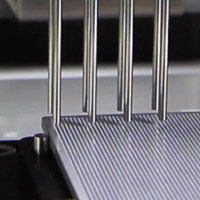
Save resources and increase sample throughput for COVID-19 detection
The SmartChip Real-Time PCR System is a complete, high-throughput solution with unrivaled flexibility in assay and sample formats. This system supports:
- 100-nl reaction volumes that decrease costs up to 200X vs. traditional plates
- 5,184 wells for processing up to 384 samples per chip
- Automated dispensing that reduces hands-on time
- 14 different dispense patterns that enable rapid switching, adding, or removing assays and replicates
Find more products for COVID-19 research
Helping researchers tackle COVID-19

Know your enemy: finding certainty in uncertain times
This blog highlights one of the first studies identifying and characterizing the novel coronavirus, ultimately contributing to the viral genome sequence being shared worldwide.
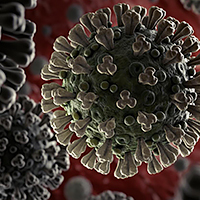
Screening for the novel coronavirus with one-step RT-qPCR
Learn how researchers identified a novel, highly contagious coronavirus and developed a one-step RT-qPCR screening protocol.
Takara Bio plays a crucial role in fighting the novel coronavirus
Learn how Takara employees in Dalian, China, are working tirelessly to keep up with the demand for the one-step PrimeScript RT-PCR kit, a crucial component in the detection of the novel coronavirus.

Entering new worlds while staying in place
Hear how a Product Manager in Europe is adjusting to the changing research market in light of COVID-19.

Working hard to meet production demands for SARS-CoV-2 testing
Hear how a Takara Bio employee of 27 years is contributing to the COVID-19 effort.

Dethroning king coronavirus with novel vaccines
Find out which types of SARS-CoV-2 vaccines are out there and how Takara Bio is joining the fight.

COVID-19 drug discovery
Our hiPSC-derived cells and other cell biology research products help you study SARS-CoV-2 infection, identify potential targets for drug discovery, evaluate the metabolism and safety of candidate drugs, and develop therapeutic approaches for COVID-19.

Takara Bio products in COVID-19 publications
An ever-growing compilation of COVID-19 publications using Takara Bio products and technologies.
Takara Bio USA, Inc.
United States/Canada: +1.800.662.2566 • Asia Pacific: +1.650.919.7300 • Europe: +33.(0)1.3904.6880 • Japan: +81.(0)77.565.6999
FOR RESEARCH USE ONLY. NOT FOR USE IN DIAGNOSTIC PROCEDURES. © 2025 Takara Bio Inc. All Rights Reserved. All trademarks are the property of Takara Bio Inc. or its affiliate(s) in the U.S. and/or other countries or their respective owners. Certain trademarks may not be registered in all jurisdictions. Additional product, intellectual property, and restricted use information is available at takarabio.com.
