



HisTALON Gravity Columns—Fast, easy his-tagged protein purification
TALON Metal Affinity Resin is a durable immobilized metal affinity chromatography (IMAC) resin that has a remarkable affinity and specificity for his-tagged proteins. TALON Resin is compatible with all commonly used IMAC reagents and allows protein purification under native or denaturing conditions.
TALON Metal Affinity Resin is a durable immobilized metal affinity chromatography (IMAC) resin that has a remarkable affinity and specificity for his-tagged proteins. TALON Resin is compatible with all commonly used IMAC reagents and allows protein purification under native or denaturing conditions.
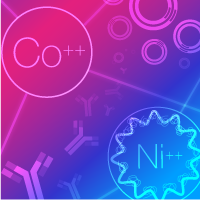
TALON Metal Affinity Resin uses cobalt ions for purifying recombinant his-tagged proteins. TALON is a tetradentate chelator charged with cobalt, and is specific for his-tagged proteins. The TALON reactive core, containing cobalt, has strict requirements for the spatial positioning of histidines. Only adjacent histidines or specially positioned, neighboring histidines are able to bind the cobalt in this reactive core. In nickel-based resins (i.e., Ni-NTA Resin), these spatial requirements are less strict. Therefore, nickel-based resins are also able to bind histidines located in places other than the protein’s his-tag.
Takara Bio offers ready-to-use HisTALON Gravity Columns for the efficient purification of his-tagged proteins from bacterial, mammalian, and baculovirus-infected cells, using gravity-flow-based protocols. The columns are prepacked with our TALON resin and can absorb more than 20 mg of his-tagged AcGFP1. These columns enable fast, easy, and reproducible chromatographic separation—and can be regenerated for multiple uses. However, we recommend that you reuse a column only to purify different batches of the same protein. If you plan to purify multiple proteins using the same column, you must utilize the “Complete Regeneration” method described in the User Manual.
Choice of native or denaturing purification conditions
TALON Resin retains its protein-binding specificity and yield under a variety of purification conditions. It is stable under both denaturing and native (nondenaturing) conditions. Deciding whether to use native or denaturing purification conditions depends on protein location, solubility, accessibility of the his tag, downstream applications, and the need for preservation of biological activity.
- Native conditions
Purifying a protein under native conditions is the most efficient way to preserve its biological activity, but requires that the protein be soluble. Advantages include:
- Eliminating the renaturation step at the end of the purification, saving time, and preventing significant loss of activity
- Retaining the ability to copurify enzyme subunits, cofactors, and associated proteins
- Denaturing conditions
Because proteins that are overexpressed in prokaryotic systems sometimes form insoluble aggregates called inclusion bodies, you may need to purify proteins under denaturing conditions—using strong denaturants such as 6 M guanidinium or 8 M urea to enhance protein solubility. Advantages include:
- Complete solubilization of inclusion bodies and his-tagged proteins
- Improved binding to the matrix and reduced nonspecific binding, due to full exposure of the his tag
Use of reducing agents
Purification with TALON resin may be carried out in the presence of β-mercaptoethanol, but not DTT or DTE, to preserve reduced sulfhydryl (-SH) groups that are important for the biological activity and structure of a given protein. TALON provides higher yields than Ni-NTA in the presence of β-mercaptoethanol.
Overview
- Easy-to-use prepacked gravity columns
- Maximize yield of biologically active protein
- Superior purity & high yields with TALON Resin
More Information
Applications
Purified recombinant his-tagged proteins can be used for:
- Crystallography
- Functional assays
- Structural investigations
- Other applications
Additional product information
Please see the product's Certificate of Analysis for information about storage conditions, product components, and technical specifications. Please see the Kit Components List to determine kit components. Certificates of Analysis and Kit Components Lists are located under the Documents tab.



Why choose TALON resin?
Obtain highest purity with cobalt resin
Prepare exceptionally pure his-tagged proteins from bacterial, mammalian, yeast, and baculovirus-infected cells.
Takara Bio USA, Inc.
United States/Canada: +1.800.662.2566 • Asia Pacific: +1.650.919.7300 • Europe: +33.(0)1.3904.6880 • Japan: +81.(0)77.565.6999
FOR RESEARCH USE ONLY. NOT FOR USE IN DIAGNOSTIC PROCEDURES. © 2025 Takara Bio Inc. All Rights Reserved. All trademarks are the property of Takara Bio Inc. or its affiliate(s) in the U.S. and/or other countries or their respective owners. Certain trademarks may not be registered in all jurisdictions. Additional product, intellectual property, and restricted use information is available at takarabio.com.
