Tissue melting on tile: Precise placement method
Sample is placed onto a tile with precise alignment. This method is recommended if the sample is significantly larger or smaller than the tile.



See how it works! These Seeker protocol videos demonstrate key steps in the Seeker workflow to produce sequencing-ready libraries from fresh-frozen tissues and obtain high-resolution spatial transcriptomic information.
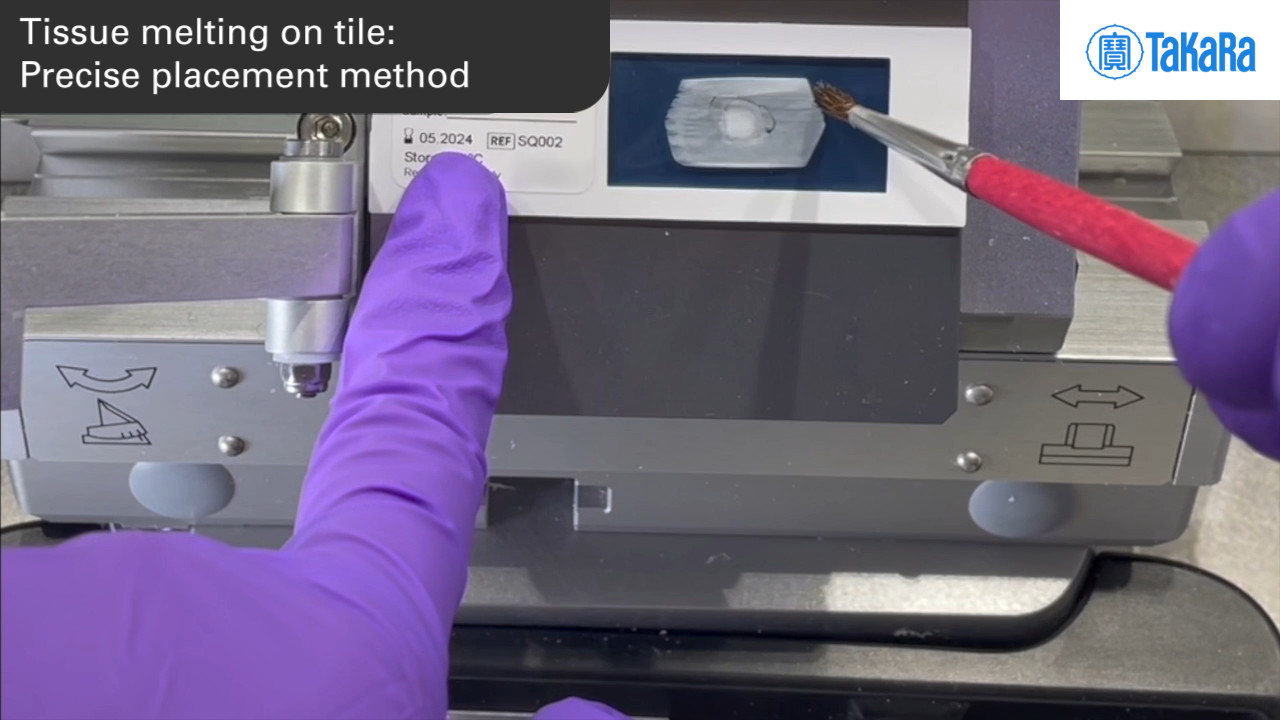
Sample is placed onto a tile with precise alignment. This method is recommended if the sample is significantly larger or smaller than the tile.
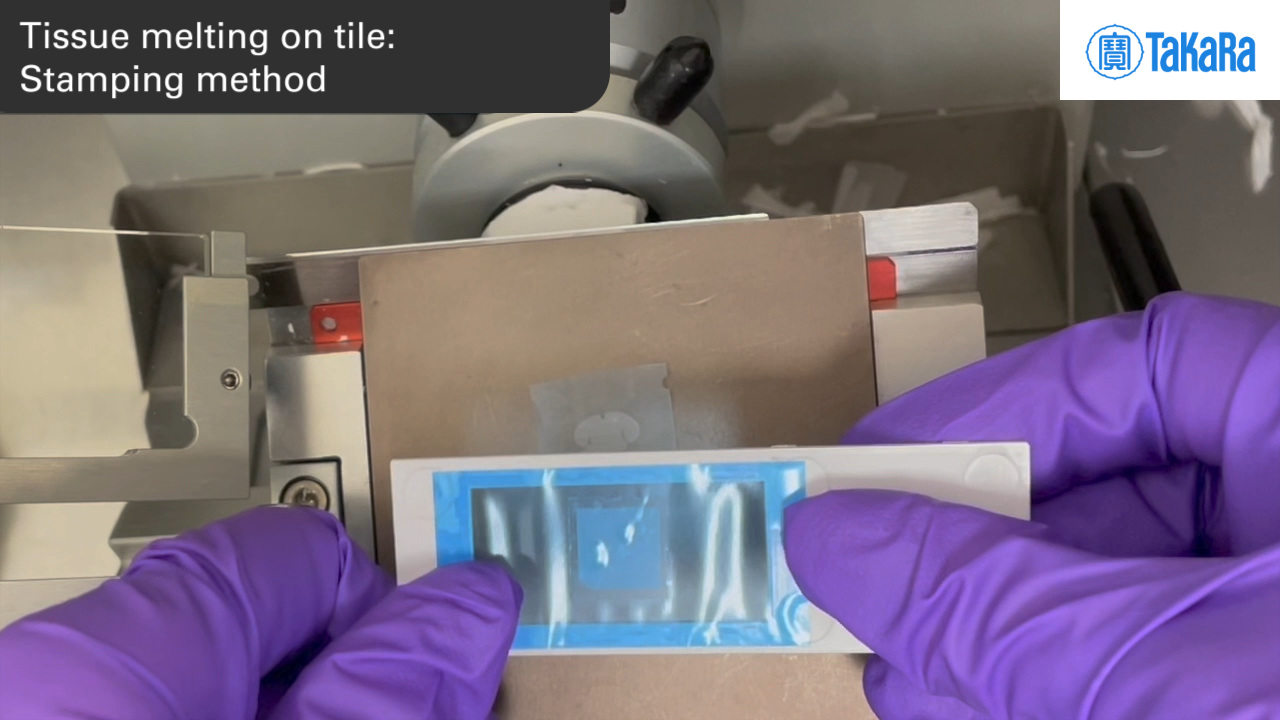
Sample is stamped onto a tile. This method is recommended if the sample is the same size as the tile and does not require precise alignment.
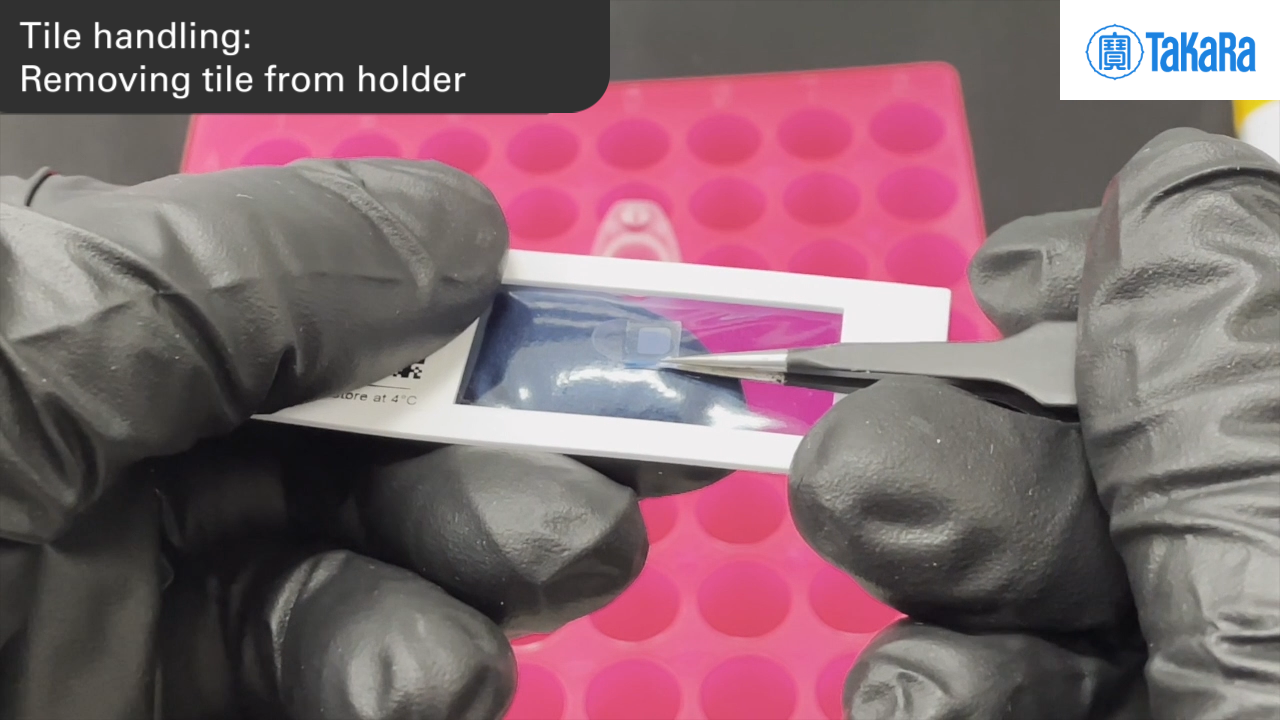
Seeker 3x3 tile with melted sample is moved to a microcentrifuge tube and submerged in Hybridization Reaction Mix. This step takes place after the CryoCube overlay has been applied (not shown in video). For frozen samples, thaw your tile before this step.
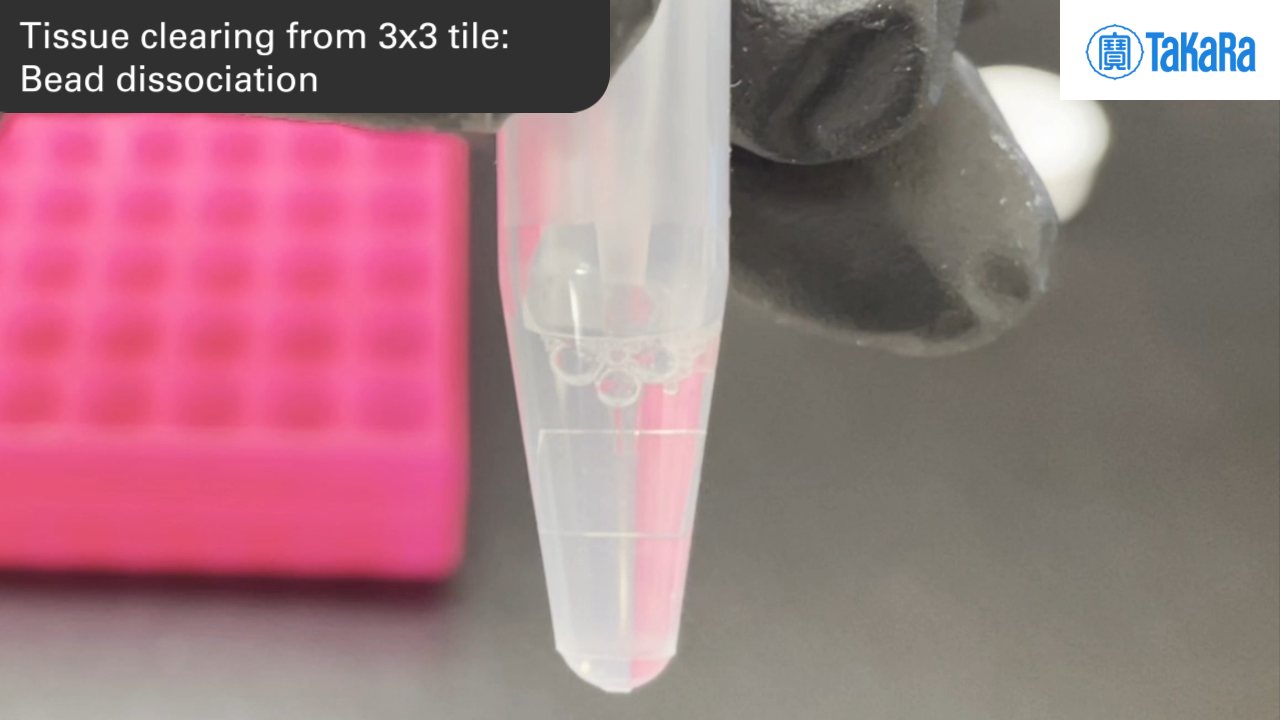
Sample tissue and beads are washed from the Seeker 3x3 tile. This step takes place after the tissue clearing reaction has occurred (not shown in video).
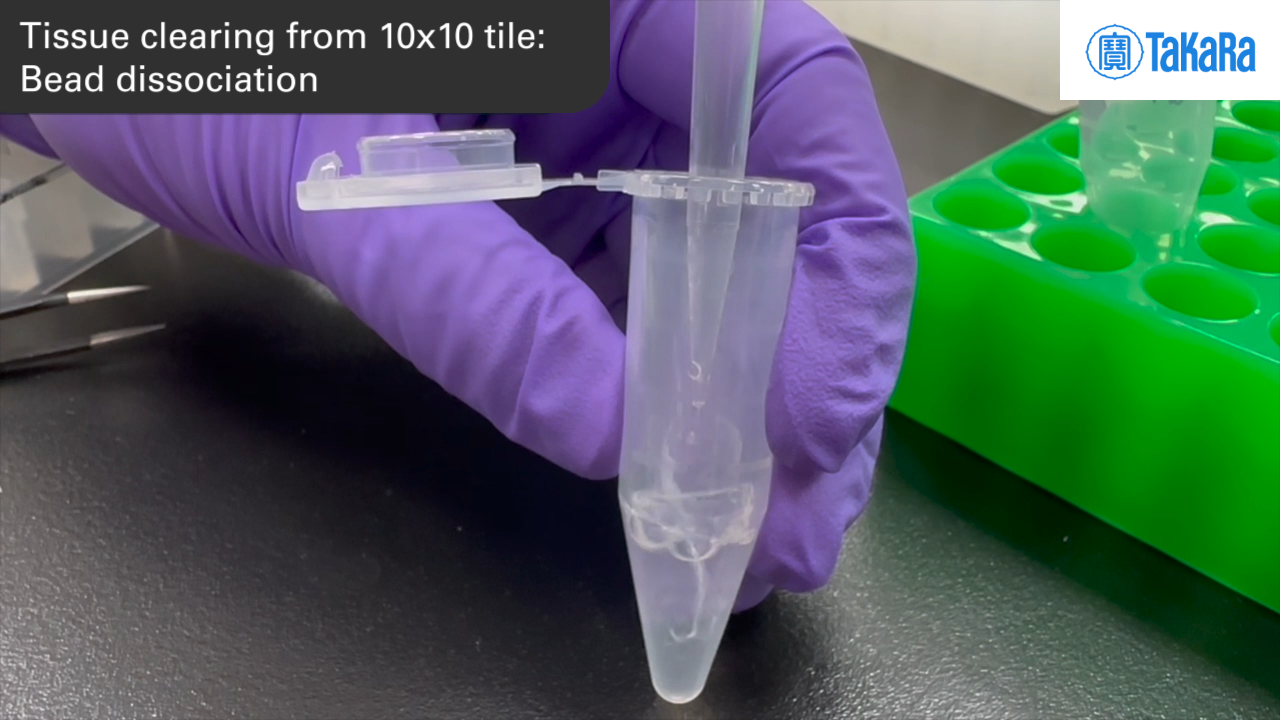
Sample tissue and beads are washed from the Seeker 10x10 tile. This step takes place after the tissue clearing reaction has occurred (not shown in video).
Takara Bio USA, Inc.
United States/Canada: +1.800.662.2566 • Asia Pacific: +1.650.919.7300 • Europe: +33.(0)1.3904.6880 • Japan: +81.(0)77.565.6999
FOR RESEARCH USE ONLY. NOT FOR USE IN DIAGNOSTIC PROCEDURES. © 2025 Takara Bio Inc. All Rights Reserved. All trademarks are the property of Takara Bio Inc. or its affiliate(s) in the U.S. and/or other countries or their respective owners. Certain trademarks may not be registered in all jurisdictions. Additional product, intellectual property, and restricted use information is available at takarabio.com.
©2025 Takara Bio Inc. All Rights Reserved.
Region - North America Privacy Policy Terms and Conditions Terms of Use

Tissue melting on tile: Precise placement method
Sample is placed onto a tile with precise alignment. This method is recommended if the sample is significantly larger or smaller than the tile.
Tissue melting on tile: Stamping method
Sample is stamped onto a tile. This method is recommended if the sample is the same size as the tile and does not require precise alignment.
Tissue handling: Removing tile from holder
Seeker 3x3 tile with melted sample is moved to a microcentrifuge tube and submerged in Hybridization Reaction Mix. This step takes place after the CryoCube overlay has been applied (not shown in video). For frozen samples, thaw your tile before this step.
Tissue clearing from 3x3 tile: Bead dissociation
Sample tissue and beads are washed from the Seeker 3x3 tile. This step takes place after the tissue clearing reaction has occurred (not shown in video).
Tissue clearing from 10x10 tile: Bead dissociation
Sample tissue and beads are washed from the Seeker 10x10 tile. This step takes place after the tissue clearing reaction has occurred (not shown in video).